Research brief 06.02The leap
Bringing Catering In-House: The Biggest Make-vs-Buy in the Trade
In-house catering isn't an upgrade to your venue. It's a second company, a restaurant that only opens on event days, bolted to your first one. Decide it the way you'd decide to found a company, because you are.
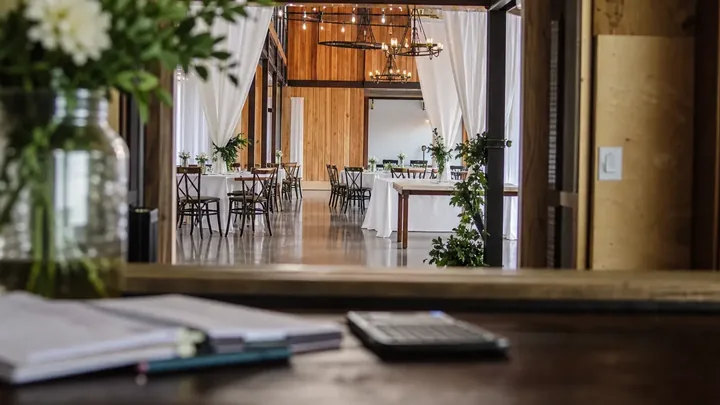
Somewhere past the fortieth event of watching a caterer collect the biggest cheque in the room, every venue owner runs the same thought: we should keep that. Sometimes they should. But "bringing catering in-house" is the largest make-vs-buy in the trade precisely because it isn't a vendor swap. It's a change of business model that touches capex, labor, pricing, licensing, risk, and the owner's week. The cleaning worksheet's discipline applies, scaled up an order of magnitude.
1. What you'd actually be keeping
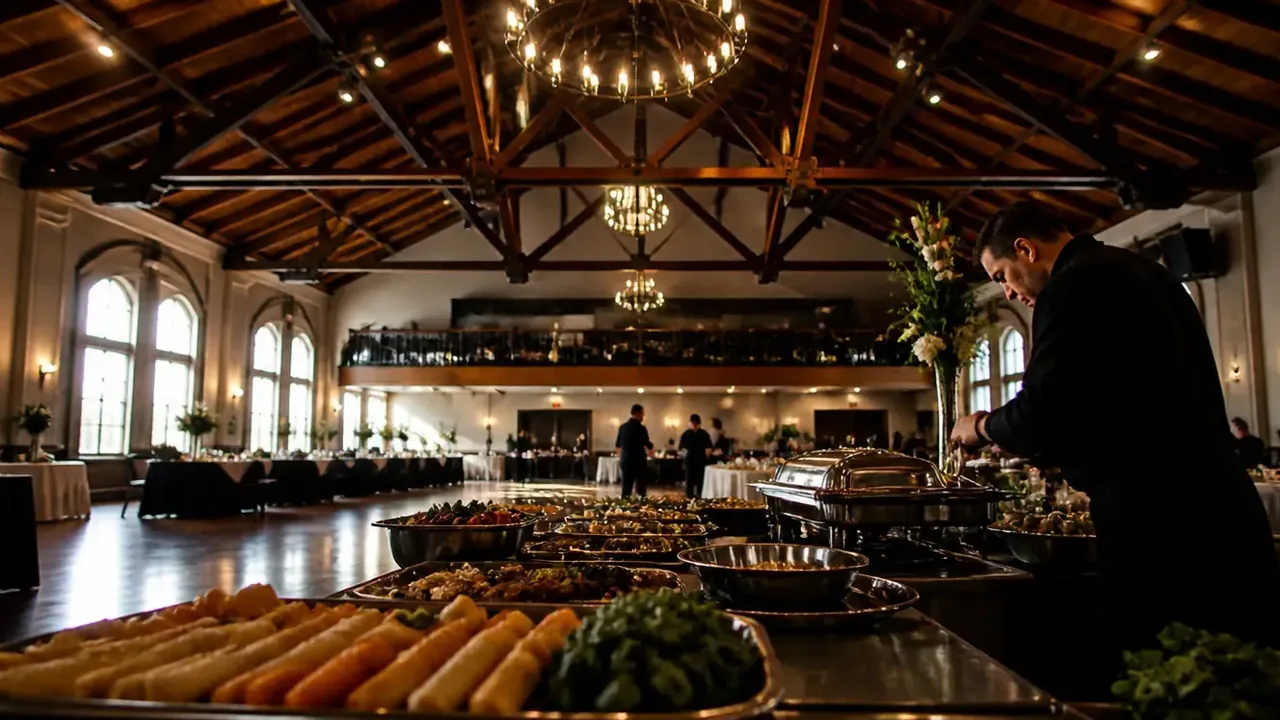
The prize is the margin on the F&B spend already flowing through your building, not the revenue. Measure it from your own books: your clients' catering invoices, which your contracts and vendor records already reveal, times the margin a competent operation keeps of them. The revenue is the seduction; the margin is the business. Food revenue arrives with food cost, kitchen labor at loaded rates, service staff, smallwares, shrinkage, and waste attached, and what survives is a normal operating margin on a hard trade: real money at banquet volume, per the banquet-hall anatomy, but a fraction of the cheque you watched the caterer collect. The commission you currently charge that caterer, or could, is the honest baseline: in-house must beat commission income plus zero risk, not beat zero.
2. The entry price: capex, license, and a second labor pool
The make column's fixed costs are the leap's defining feature. A commercial kitchen is five-figure-to-six-figure capex (build-out, ventilation, fire suppression, equipment, all of it landing on the capex ledger and both clocks), plus health-department licensing and inspection regimes layered onto your compliance stack, plus insurance changes. The labor is the deeper commitment: a kitchen lead you can trust with banquet volume (scarce, expensive, and the single point of failure for every booked menu) plus a cook-and-server bench that doubles your pool management burden. Note what the fixed pile does to your break-even: every dollar of kitchen overhead raises the event count the building needs, which means volume is the precondition, not the plan. In-house catering below sustaining volume is a machine for converting a profitable dry-hire venue into a struggling restaurant with a nice ballroom.
3. The worksheet, worked
| Model | Assumed annual F&B income to venue | What it costs you |
|---|---|---|
| Open catering + outside-vendor fee | $28,000 | Supervision of strangers; least control |
| Exclusive caterer + 12% commission | $67,000 | Client choice narrows; quality rides one partner |
| In-house: assumed $560,000 F&B revenue at 14% operating margin | $78,000 | $180,000 kitchen capex + a second company to run |
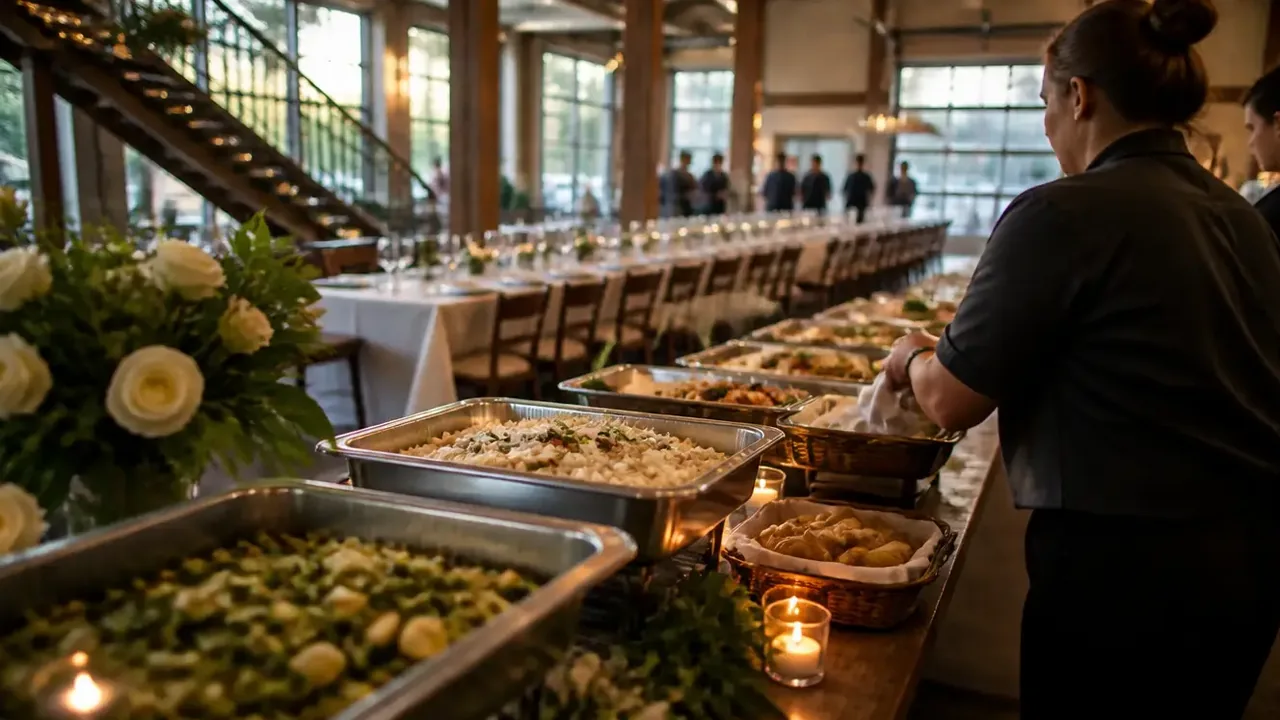
Under these deliberately unromantic assumptions, in-house beats the exclusive-commission model by $11,000 a year, against $180,000 of capital and a permanent management load. That's the shape to test your real numbers against, because it's the shape operators skip: the relevant comparison was never "in-house versus nothing," it's in-house versus the best contractual capture of the same flow, and commissions, exclusivity fees, and per-event kitchen rentals capture a remarkable share of the prize at zero capex and zero payroll. In-house wins decisively in specific conditions: volumes well past the fixed pile, a market whose caterers are weak (making quality itself the growth lever), menu control as a genuine brand strategy, or an operator who actually is a food-service professional. Absent those, the contractual models usually win the arithmetic.
4. What changes if you leap
Model the second-order effects before deciding, because they reprice the whole venue. Your pricing structure shifts toward per-head and minimums, inheriting guarantees and mix risk. Your event mix re-ranks: formats you loved as dry-hire (the self-catered cultural wedding) may now be your worst room-nights, while formats you declined become your best. Your cancellation exposure grows (booked menus mean purchased food and scheduled kitchen labor, and deposit design must be rebuilt for it). Your bar probably comes in-house on the same logic at lower entry cost. Indeed, the bar is the standard first move and the best rehearsal: it tests your appetite for inventory, counts, licensing, and F&B staff management at a tenth of the capex. An operator who hasn't enjoyed running the bar in-house has learned something important about the kitchen question, cheaply.
5. The number the kitchen lives or dies by: menu engineering
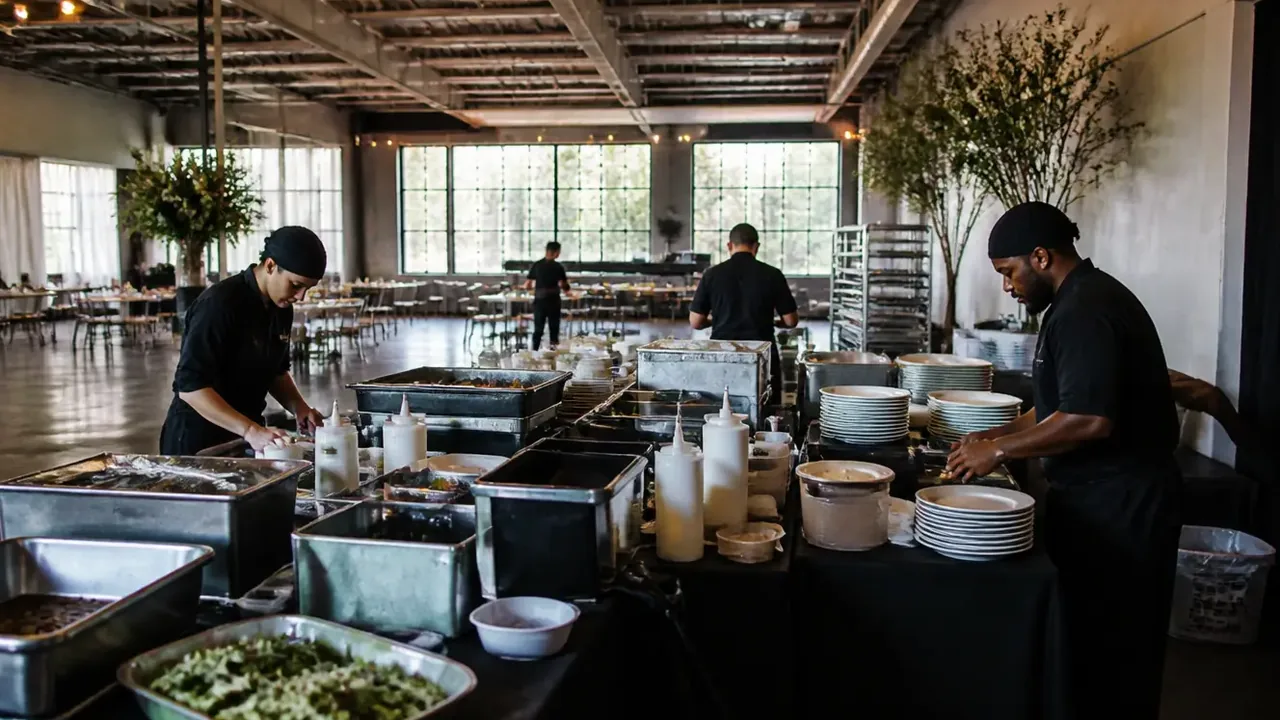
Every menu item is a tiny P&L: plate cost against menu price, times how often clients choose it. If the leap happens, the venue inherits that discipline whole: costed recipes, weighed and priced, per the appendix habit of the banquet-hall plan. Banquet menus make this discipline easier than restaurants have it: fixed menus chosen weeks ahead, guaranteed counts, no à-la-carte chaos, which means waste and purchasing can be engineered tightly, and should be, because the margin assumed in §3's worksheet exists only if someone is actually costing plates, negotiating suppliers, counting the walk-in, and re-pricing the menu as food costs move. That someone is the kitchen lead, and the discipline is the real job description: banquet cooking is a solved craft; banquet costing is where the money is made or quietly lost. The operator's control is the same as the bar's: a monthly counted food-cost percentage against the theoretical one, and a standing rule that the gap gets explained, not absorbed.
6. The staged path
Like the second room, the leap stages beautifully, and the stages are real businesses rather than experiments: in-house bar first (margin, counts, licensing rehearsal); then a finishing kitchen supporting an exclusive caterer partnership with a deeper revenue share (they cook, you plate and serve, both keep margin, and their chef teaches your building banquet service); then in-house for a subset (corporate lunches, small socials, packages with fixed menus) where menu engineering is simplest and failure is cheapest; then, on demonstrated volume and a proven kitchen lead, the full leap. Each stage generates the next stage's data and a viable place to stop. The venues that regret the kitchen are almost never the ones that climbed this ladder; they're the ones that jumped from the fortieth-event epiphany straight to the equipment auction, in either direction.
Whichever model wins, revisit the decision on a schedule rather than a whim: the inputs (your volume, your market's caterers, your kitchen-lead options) all drift, and the worksheet that said "commission" at fifty events a year may say "in-house" at a hundred and ten. The leap is large enough to deserve arithmetic and repeatable enough to deserve fresh arithmetic every couple of years.