Research brief 06.01Expansion
The Second Room: Adding Space Under the Same Roof
Room two is not a second venue: it's a marginal bet layered on the first one. Its economics are decided by what it shares, what it duplicates, and what it steals from the room you already have.
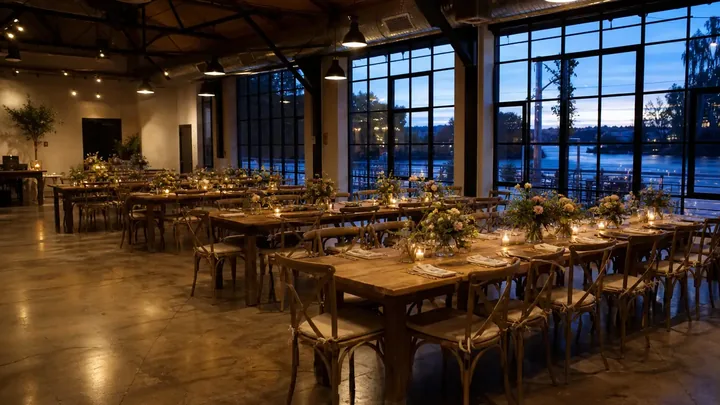
Every venue that fills eventually stares at the storage wing, the mezzanine, or the courtyard and thinks: second room. The instinct is sound: expansion under an existing roof is the cheapest square footage a venue will ever add, but the arithmetic is marginal arithmetic, and marginal arithmetic cuts both ways. Room two inherits assets it doesn't pay for, duplicates costs the brochure forgets, and competes with room one for demand, dates, and crew. This article runs the bet properly. (What the room should physically be (layout, capacity, dimensions) is the sibling trade's problem; this is the money and operations of whether it should exist.)
1. The shared-cost windfall: and its limit
Room two starts with everything it doesn't have to buy. The address and its reputation, the acquisition machinery, the licensing spine, the parking, the kitchen, the admin stack, and most of the fixed pile that room one's break-even already carries. A booking in room two therefore needs to cover only its incremental costs, which is why second-room contribution can look spectacular on paper. The limit is that "shared" quietly means "contended": shared parking is fine until both rooms seat capacity crowds on the same Saturday; the shared kitchen is fine until two dinners plate at seven; the shared lobby is fine until two events' guests meet in it. Every shared asset has a concurrency ceiling, and the honest plan prices the upgrades that real concurrency forces, because those upgrades are part of room two's true capital cost, discovered now or during someone's wedding.
2. The duplicated costs the brochure forgets
Some lines don't share. Room two brings its own build-out and FF&E fleet (a full lifecycle ledger's worth, accruing from day one), its own turnover load (two rooms flipping on the same weekend is the exact surge case that breaks a one-crew operation, per the pool article), its own utility draw and often its own HVAC zone, more insurance, and, least visibly, a second operational consciousness: two event timelines running simultaneously need either a second coordinator-grade person or an owner in two places. That last line is the one that converts thriving single-room operators into exhausted two-room ones; staff it in the plan, at a loaded rate, or the plan is fiction.

3. Cannibalization: the demand question asked honestly
Room two's revenue projection fails most often at one assumption: that its bookings are new. Some fraction will be room one's demand wearing a different door: the mid-size social that would have bought the big room at the big price now takes the small room at the small one. Cannibalization isn't automatically bad (capturing the too-small-for-room-one inquiries you currently lose is the whole point), but it must be net-counted:
The protective design is segmentation by construction: the more room two differs from room one (capacity band, service level, pricing structure, even entrance) the less their demand overlaps, and the more the second room reads as a second product rather than a discount door into the first. The best second rooms are aimed at inquiries the venue currently declines: the forty-guest dinner, the corporate offsite, the weekday formats that never fit the ballroom's floor.
4. The evidence bar: what should be true before you build
Room two is justified by room one's data, or it isn't justified. The checklist: segmented utilization showing the prime classes genuinely full (an empty-Saturday venue adding capacity is multiplying emptiness); a lost-inquiry log showing real declined demand in the size band room two would serve (start logging today. It's the cheapest feasibility study in existence); pace history strong enough to say the fullness is a trend, not a season; and an operation that already runs without heroics, because expansion multiplies whatever operational state it finds: a venue that barely survives its own Saturdays should fix that machine before duplicating it. Then run the capital math like any venue financing: incremental contribution as the numerator, the build's debt service as the denominator, stress-tested at the honest slow case, per the DSCR article.

5. The double-booking dividend: and its operational tax
Room two's most valuable property never appears in its own P&L: it makes the calendar composable. Two rooms can host the ceremony-and-reception flip without a mid-event turnover sprint, hold the corporate meeting while the wedding sets up, and sell the whole building as a buyout tier: a genuine new product at a premium price. They also de-risk the book: a maintenance closure or an incident in one room no longer darkens the venue. But every composition is an operational tax paid in coordination: simultaneous events share sound bleed, guest flow, parking peaks, and your team's attention, and the venues that make two rooms feel like two venues have written the separation into physical and procedural design: staggered start times as policy, separate arrival paths, sound limits in the contracts, and a floor lead per active room. Price the dividend and the tax together: buyout premiums and flip-friendly packages on the revenue side, the second floor lead and the acoustic work on the cost side. Venues that count only the dividend meet the tax in their reviews.
6. Sequencing the cheaper experiments first
Before committing capital to walls, rent the hypothesis. Most second-room theses can be tested at a fraction of the cost: host the smaller format in the big room mid-week with a tailored package (tests the demand, not the room); tent or activate the courtyard seasonally (tests the second-event operations, the double turnover, the shared-kitchen contention, the two-timeline strain, on refundable money); take the overflow corporate work in a partitioned configuration and see what actually books. Each experiment produces exactly the data the §4 checklist wants, and each can fail cheaply, which is the property capital projects never have. If the experiments keep selling out, build with confidence; if they keep not-quite-filling, the storage wing just saved you from the most expensive way to learn your market's real size. The staged path costs a season; the unstaged mistake costs the reserves of several.
And if the answer is no, or not yet, write down what would change it: the utilization threshold, the declined-inquiry count, the season of successful experiments. A declined expansion with named reopening conditions is a strategy; a declined expansion with a shrug is just this year's mood, waiting to be reversed by next year's.